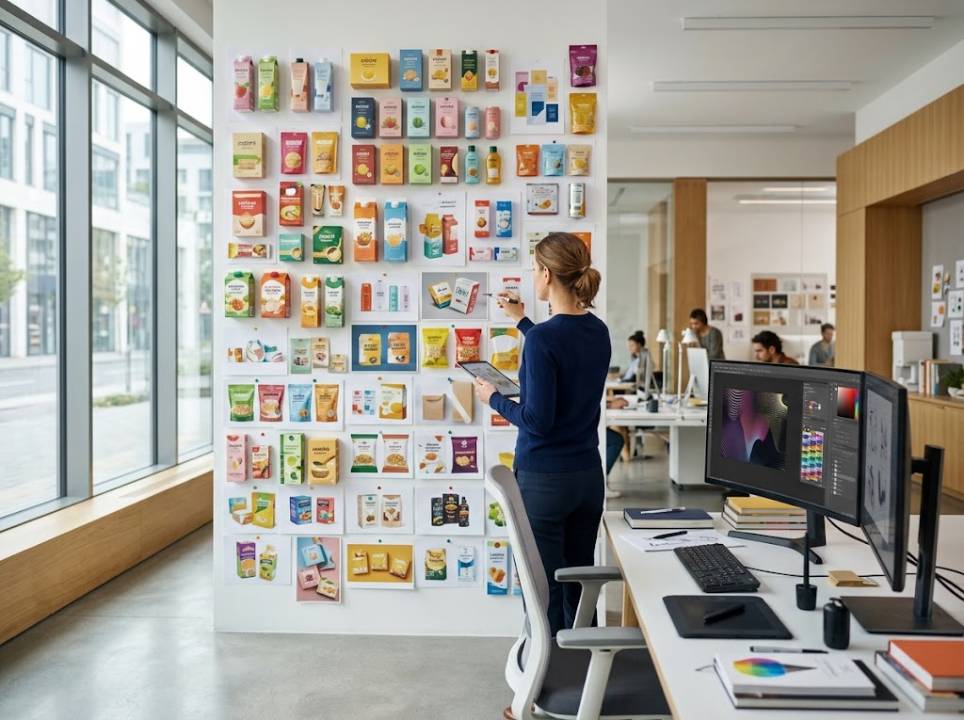
Imagine a mid-sized cosmetics brand launching a new face cream. The formula is ready, the design is approved, the factory is booked. Then someone remembers that the product will be sold in twenty countries. Suddenly the carton, the tube, the leaflet and the online listing all need text in more than a dozen languages, each checked against local rules, each fitting the same tiny space, each approved before the printing plates are made.
This is the everyday reality of packaging localisation, and it is why more manufacturers are turning to structured technology rather than spreadsheets and email.
Why packaging text is uniquely difficult
Packaging and labeling sit at the crossroads of law, design and marketing. The text has to satisfy regulators, fit a fixed layout and still persuade a shopper in two seconds. Change one ingredient and every language version changes too. Miss one country's requirement and an entire shipment can be blocked at customs or pulled from shelves.
The difficulty is not translation alone, it is coordination. Dozens of linguists, designers, regulatory specialists and printers all touch the same content.
What goes wrong without a system
Companies that manage packaging text by email and spreadsheets tend to see the same problems:
- Translators working from outdated source files
- Different wording for the same ingredient across products
- Approvals lost in inboxes
- Designers pasting text manually and introducing typos
- No clear record of which version went to print
Each mistake is small. Together they cost money, delay launches and occasionally trigger recalls.
Enter the translation management system
A translation management system gives the whole process one home. Source text, translations, reviewers, deadlines and approvals live in a single platform. Everyone works from the same current version, and every change is logged.
For manufacturers with large ranges, an enterprise translation management system adds features such as single sign-on, role-based permissions and integration with product information management and artwork tools.
Automating the workflow
A good translation workflow management system turns packaging projects into repeatable steps:
- New or changed source text is detected automatically
- Only the changed segments are sent to translators
- Regulatory reviewers in each country approve their language
- Approved text is exported directly to the design team
- Final artwork is checked against the approved text before print
This automation matters most when products are updated frequently. A new supplier, a revised nutrition value or a changed legal address can ripple through hundreds of SKUs. With a system in place, the update takes hours instead of weeks.
Terminology as a safety net
Ingredient names, warning phrases and legal statements must be identical across a range. Termbases inside the TMS store the approved translation for each term, and the translator's editor flags any deviation. For cosmetics, that means INCI names and standard warnings. For food, it means allergens and storage instructions.
One approved translation, used everywhere, is the simplest way to stay compliant.
The editor translators actually use
Translators working on packaging usually do so in a cat tool connected to the TMS. It shows the source and target side by side, applies translation memory and termbase suggestions, and checks length limits. Some editors even display a preview of the label, so the translator can see whether the text will fit before the designer ever touches it.
Handling languages with special requirements
Some markets need extra care. Eastern European and Central Asian markets often require Russian alongside local languages, and Russian text with Cyrillic characters must be checked carefully for font support and line breaks. Many brands rely on specialist russian translation services for these packs, with linguists who understand both the regulations and the technical constraints of printed Cyrillic.
Right-to-left scripts such as Arabic and Hebrew pose their own layout challenges, and Asian languages may need vertical text or specific fonts. A TMS helps by keeping these requirements documented per language.
Measuring the benefit
Companies that adopt structured packaging localisation usually report:
- Faster time to market for new products
- Lower translation costs thanks to reuse of approved text
- Fewer errors reaching print
- A clear audit trail for regulators and retailers
The audit trail is often underestimated. When an inspector asks when a warning was changed and who approved it, a TMS can answer in seconds.
Getting started
Start with one product family. Import existing approved translations to build the first memory and termbase. Define who approves each language and set realistic turnaround times. Once the process works for one range, roll it out across the portfolio.
Retailers raise the bar
Large retail chains increasingly demand proof that packaging text has been professionally translated and approved. Some require suppliers to upload label content into their own compliance portals, in every language, before a product can be listed. Suppliers with a TMS can export the approved text in the right format within minutes, while those relying on scattered files scramble to reconstruct what was printed.
Being able to show exactly what each label says, in every language, is becoming a competitive advantage in retail negotiations.
Final thoughts
When packaging must speak twenty languages, partnering with the right translation company prevents costly reprints. Professional linguists coordinate with designers and regulatory reviewers in one workflow. This integrated approach keeps labels compliant and shelves stocked across all markets.
Packaging localisation will never be simple, because it combines strict rules with tight space and many stakeholders. A well-chosen TMS turns that complexity into a controlled, repeatable process, so that every product reaches every market with text that is accurate, consistent and ready for the shelf.